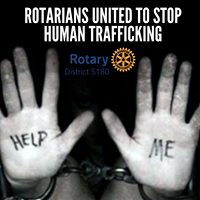
National Human Trafficking Awareness Day
Although focused on the same issue and committed to the same end, National Human Trafficking Awareness Day is a day separate and distinct from the United Nations' World Day Against Trafficking in Persons.
The United States Senate established National Human Trafficking Awareness Day in 2007 to raise awareness in the United States about human trafficking and national slavery because modern slavery is not something that just occurs in other countries.
In the Senate Resolution establishing Human Trafficking Awareness Day, the U.S. refuses to let human trafficking exist in the United States and around the world and commits to actively oppose all individuals, groups, organizations, and nations who support, advance, or commit acts of human trafficking.
Facts About Human Trafficking
Source: United Nations Office on Drugs and Crime
- Every country in the world is affected by human trafficking, as countries of origin, transit or destination - or even all three.
- Trafficking often occurs from less developed countries to more developed countries.
- Most trafficking is national or regional, but long-distance trafficking does occur.
- Europe is the destination for victims from the widest range of destinations, while victims from Asia are trafficked to the widest range of destinations.
- Sexual exploitation (e.g., sex trafficking) is by far the most commonly identified form of human trafficking. It is the most visible. Other forms of exploitation are under-reported.
- A disproportionate number of women are involved in human trafficking both as victims and as culprits.
- Most trafficking is carried out by people whose nationality is the same as that of their victim.
- Most trafficked forced labor occurs in agriculture, construction, garments and textiles, catering and restaurants, domestic work, the provision of healthcare services, entertainment and the sex industry.